




"Real-time translation is just faster simultaneous interpretation"—this intuition needs correction. The underlying mechanisms of machine pipelines and human interpretation differ: the former is a serial chain of "speech recognition → translation → output," where latency is the cumulative value across stages; the latter is continuous human output within a 1-to-2-second buffer window. The real variable in selection is not "who is faster" but how much delay your scenario can tolerate and whether post-editing of the output is acceptable.
"Faster or slower" is the shallowest distinction—what truly differs are the two pipelines
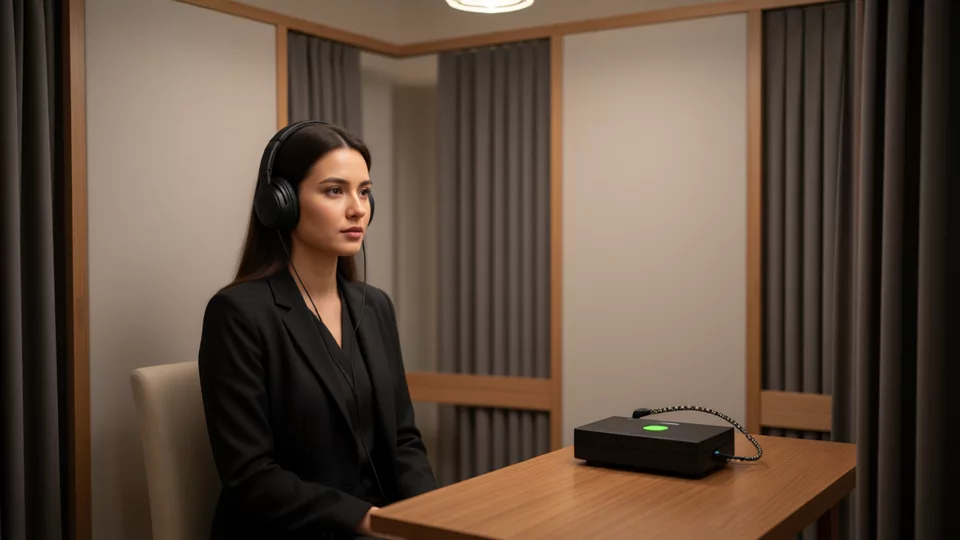
A simultaneous interpreter sits in a glass booth, listening to the source language, converting it mentally, and producing continuous output in the target language. Throughout this process, the human brain acts as a "sliding window buffer"—by the time the content at the 3rd second is heard, the translation of the 1st second may have just been finished. This buffer is typically kept within 1 to 2 seconds; exceed it, and a "stream break" occurs.
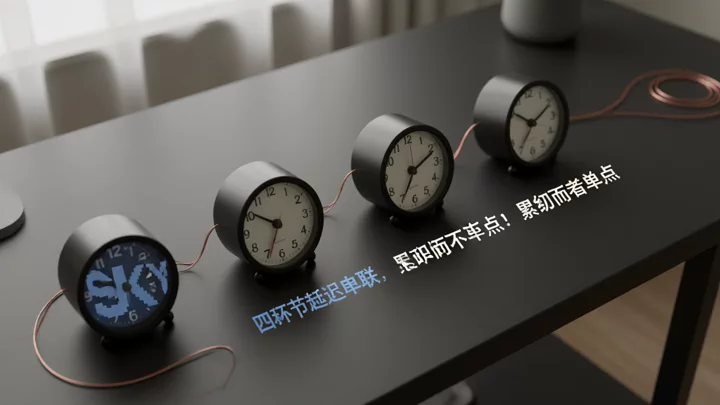
Real-time translation is a machine pipeline: microphone capture → ASR to text → MT engine translation → TTS synthesis or on-screen subtitles. Each stage has its own independent latency, and total latency is a serial accumulation rather than a single-point speed. This means "real-time" is an engineering parameter that can be compressed by optimizing a particular stage, without the kind of "losing the thread" break that occurs in the human brain.
How Real-Time Translation Works: Cumulative Latency Across Four Stages
Typical latency ranges for the four stages (illustrative relative magnitudes; does not represent specific vendor data):
- Audio Capture and Endpoint Detection: 100–300 ms (waiting to confirm a sentence is complete)
- Speech recognition (ASR): 200–800 ms (depends on the acoustic model and degree of streaming)
- Machine translation (MT): 50–200 ms (a single sentence via neural machine translation is typically under 100 ms)
- Output (TTS synthesis / subtitle rendering): 100–500 ms
With all four stages stacked together, end-to-end latency typically falls between 0.5 and 2 seconds. This is the dividing line between "real-time" and "near-real-time": keep it under 1 second and two-way conversation flows naturally; exceed 2 seconds and the scenario shifts toward "subtitle following" rather than "conversation."
If your pipeline involves on-screen subtitles for live streams or meetings, you can refer to the full capture → recognition → translation → on-screen display configuration and latency troubleshooting sequence inHow to Do Real-Time Translated Subtitles for Live Streams: The Complete Workflow from Speech Recognition to On-Screen Display, which covers the minimal OBS configuration and sentence-segmentation troubleshooting steps.
Latency thresholds: why different scenario rules are hidden between 1 second and 5 seconds
The tipping point for "perceptible latency" sits at roughly 1.5 seconds: below that value, listeners or readers feel the translation "keeps up"; above it, the experience degrades into "watching it after the fact." However, tolerance for latency varies widely across scenarios:
- Two-way conversation(customer support, negotiation): tolerance ≤ 1.5 s; exceeding it produces a noticeable sense of lag
- One-way subtitles(live streams, webinars): tolerance 2–4 s; viewers have visual anchors to wait on
- Word-for-word following(training, interpretation support): tolerance ≤ 1 s; otherwise the rhythm breaks down
So "real-time" is not a fixed number but a threshold defined by scenario constraints. When selecting a solution, first decide "how many seconds is the most this scenario can tolerate," then work backward to verify whether the technical pipeline can meet that bar—rather than turning the question around and asking "how much latency does this tool have."
Scenario boundaries between simultaneous interpretation and real-time translation
| Dimension | Simultaneous interpretation (human) | Real-time translation (machine pipeline) |
|---|---|---|
| Typical latency | 1–2 s buffer window | 0.5–2 s end-to-end (compressible stage by stage) |
| Context handling | Continuous speech stream; capable of handling long sentences and context shifts | Sentence-split, then translated segment by segment; long sentences easily lose register |
| Editability | Cannot be retroactively edited | Text output can be edited, archived, and retrieved post-hoc |
| Cost structure | Billed per person-hour; costs scale linearly as more languages are stacked | Billed per call or subscription; marginal cost decreases |
| Fault-tolerant mode | Interpreters can verbally "double back" to correct errors | Errors are resolved through post-processing or rule-based corrections |
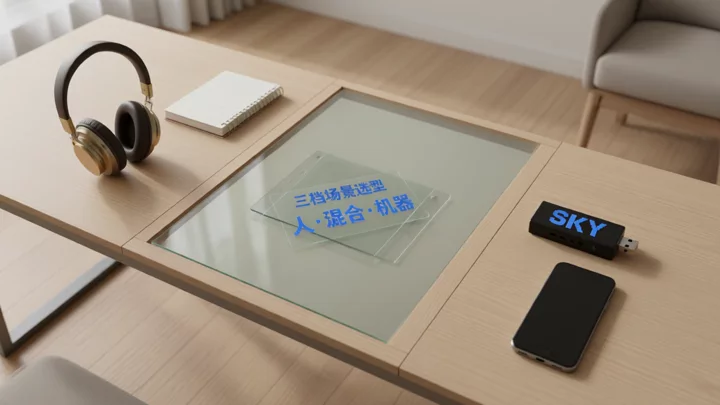
Decision criteria:Scenarios requiring human interpreters—high-risk diplomacy, legal interpretation, simultaneous interpretation into ≥3 target languages; scenarios where machines suffice—unidirectional live-subtitling, customer-service-assisted translation, meeting-minutes generation; hybrid approach—human-led interpretation plus machine-based text archiving and follow-up retrieval. In such scenarios, SKY SCRM's aggregated translation pipeline can serve as a text-layer supplement, unifying interpreter output with machine-translation results. Once a machine-based approach is confirmed, the first step in implementation is identifying the translation entry points on the device: the activation locations and verification methods differ across three scenarios—phone calls, chats, and face-to-face interactions. SeeHow to Enable Real-Time Phone Translation: Activation Methods for Calls, Chats, and Face-to-Face Scenarios.
Frequently Asked Questions
Just how fast does "real-time" actually need to be in real-time translation to meet the bar?
It depends on the scenario. For two-way dialogue, end-to-end latency should be ≤ 1.5 s; for one-way captioning, 2–4 s is acceptable; beyond 5 s, it no longer qualifies as "real-time" and is closer to "delayed captions." First define the tolerance ceiling for your use case, then evaluate whether the tool can meet it.
Can machine-translation accuracy catch up with human interpretation?
In constrained domains (customer-support scripts, product manuals), it can come close; in open contexts (improvised speeches, cross-cultural humor, ambiguous sentences), a clear gap remains. The benchmark is not "accuracy percentage" but "whether the cost of a single mistranslation in your scenario is acceptable."
Why can't simultaneous interpretation be fully replaced by machines?
Two hard constraints: first, the scheduling complexity of multilingual simultaneous interpretation (outputting in ≥3 target languages at the same time)—machine pipelines are currently less flexible than human teams; second, legal and diplomatic settings require that "translation responsibility is traceable to a person," a property that machine output does not possess.
Where exactly does the latency bottleneck sit?
In most scenarios, the bottleneck is ASR endpoint detection (waiting for the speaker to finish) and TTS synthesis. If you only need text captions, dropping TTS saves the final 100–500 ms; for two-way voice, endpoint-detection wait time is hard to compress below 100 ms—this is a physical limitation, not an algorithmic one.