




You finish your last sentence in Japanese, and Chinese characters pop up word by word on screen — from the last syllable landing to the first character appearing, the entire pipeline takes only about 1 to 3 seconds. Within those 1–3 seconds, the audio is sliced into 40–200 ms fragments fed into the streaming recognition model; for every chunk it receives, the model outputs a half-finished translation segment, and the subtitle engine binds that text back to the audio timeline. Each stage handles its own job, but if any one stage lags, the subtitles you see will be off by half a beat.
From the End of a Sentence to Subtitles Popping Up: What Happens in Those 1–3 Seconds
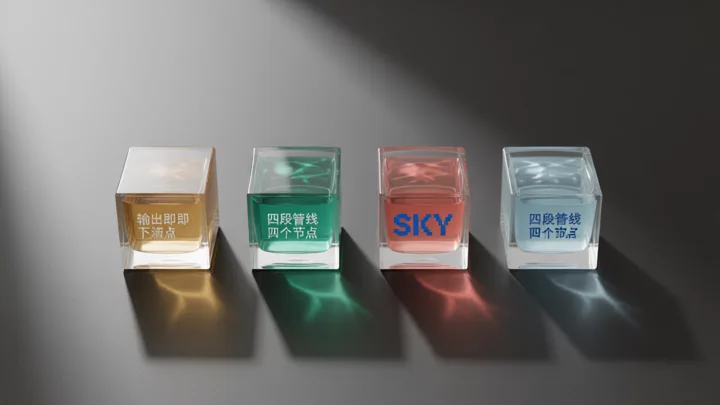
Compress the entire pipeline into four observable nodes: microphone captures the raw waveform → streaming ASR outputs a partial transcript per chunk → the incremental translator maps the partial transcript to the target language → the subtitle renderer aligns the text to timestamps and displays it on screen. Each node's input is the previous node's output; there is no "record first, process later" step. In a live-streaming scenario, this pipeline also sits on top of OBS or the platform's streaming encoder; for more specifics on the chain, seethe complete flow of live-streaming real-time translation subtitles.
Audio Streams Are Not Recordings: Chunking and Streaming Recognition
Streaming ASR does not wait for you to finish a sentence. It slices the continuous PCM stream into 40–200 ms chunks (granularity depends on the model architecture), feeds each chunk independently into the attention window, and the model immediately outputs the most likely text sequence at that point. Chunk boundaries are where sentence-break and punctuation errors most often occur: if the speaker happens to pause within the window, the model may split "so… this approach" across two chunks, and the tail end of the first is misjudged as the end of a sentence. This is the direct cause of an extra period appearing mid-subtitle or a single sentence being broken across two lines.
Incremental Decoding: Why Machines Don't Wait for Full Sentences, But Simultaneous Interpreters Wait Two Beats
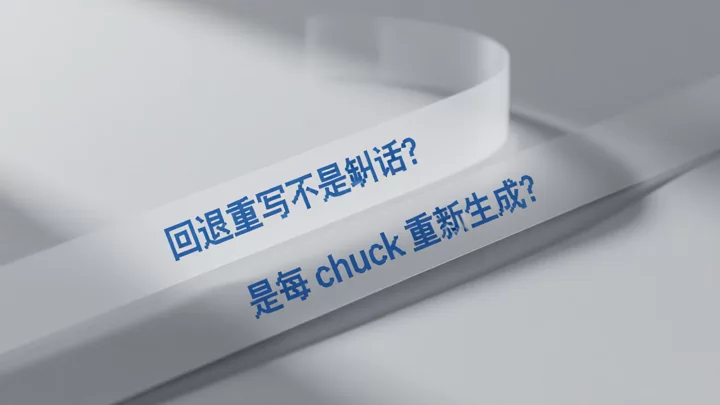
Machine translation's "not waiting for the full sentence" relies on partial hypotheses: every time a new chunk is received, the translator regenerates candidate translations based on the existing context and the current increment; if new information changes the interpretation of what came before, it backtracks and rewrites. A speaker says "I went to that… uh, the one you recommended last time" — the first few chunks already produce "I went to that…", and only later is it completed with "the place you recommended last time." The working mode of human simultaneous interpretation is different: a simultaneous interpreter typically waits a 2–3 second buffer window, accumulating a complete semantic unit before speaking, relying on short-term memory and contextual prediction, with no "backtrack-and-rewrite" mechanism. This isthe difference between real-time translation and simultaneous interpretationat its core—machines can mistranslate chunk by chunk and then correct, but words a human interpreter has spoken out cannot be taken back.
Subtitle Synchronization: Timestamps, Scrolling, and Sentence-Break Alignment
Translated text is not bound frame by frame; it is bound to timestamp intervals on the audio timeline. A single subtitle corresponds to, say, 2.3 s–4.1 s, and the renderer displays the text at the bottom of the screen within that window. Line height, font size, and scroll speed are constrained by screen resolution and reading speed: scroll too fast and readers can't finish, too slow and the text falls out of sync with the audio. The most common reason a subtitle feels "half a beat behind the audio" is not that the translation model is slow, but that the renderer waits for the next chunk to confirm the sentence break before pushing the entire line to screen, rather than displaying word by word. Implementation differences on mobile can be found inhow to enable real-time translation on mobile phones, where rendering pipeline latency varies significantly across different systems.
Where Exactly the Latency Bottleneck Lies: A Checklist for the Three-Stage Pipeline
- Streaming ASR (per chunk):80–150 ms. Latency is relatively stable and is mainly influenced by model size and network conditions.
- Incremental translation (triggered per chunk):100–300 ms. Processing time depends on context length and backoff depth—long sentences or terminology-dense passages trigger deeper beam search, pushing latency from 100 ms to 300 ms or beyond.
- Subtitle rendering and on-screen display:30–60 ms. This is usually not the bottleneck, but on low-end devices, insufficient frame rate can compound the perceived jank.
If during a live stream you feel that "the first few sentences keep up, but things start to slip in longer passages," the bottleneck is most likely in the translation stage rather than the recognition stage.
FAQ
Why does real-time translation always feel a beat "slower" than simultaneous interpretation?
It is not slower—it has a different rhythm. Simultaneous interpreters wait 2–3 seconds of buffer before speaking, while the machine outputs a partial result every 200 ms. What you perceive as lag is actually the renderer waiting for the next chunk to confirm sentence boundaries before displaying the full line, rather than scrolling word by word. Lowering the renderer's sentence-boundary wait threshold can shorten this interval, at the cost of more frequent mid-line subtitle breaks.
Does the pipeline change when multiple languages are mixed in speech?
The ASR stage requires switching or overlaying a streaming model for the corresponding language. The language-switch points within a chunk become low points in recognition accuracy. The backtracking depth in the translation stage also increases, because the preceding context suddenly shifts from English to Japanese, and the beam needs to reallocate probability. Overall latency typically increases by 50–150 ms, but the pipeline structure remains unchanged.
Which parameters can be adjusted on the tool side to reduce latency?
The actionable variables are concentrated in two places: the ASR chunk size (larger = more accurate but higher latency; smaller = faster but more fragmented sentence breaks) and the translator's beam width (smaller = faster but narrower room for backtracking and correction). Most consumer-grade tools do not expose these parameters; live-streaming OBS plugins typically only allow you to choose a "low-latency" or "high-precision" preset. If the tool does not allow parameter adjustment, switching to a smaller ASR model or reducing the context window is the most direct way to lower latency.
Are subtitle sentence-break errors a model issue or a rendering issue?
First, look at where the error occurs: if the break point falls on a chunk boundary (roughly one every 0.1–0.2 s), it is most likely that ASR misjudged the end of a sentence at the chunk boundary, which is a recognition-stage issue. If the break point is reasonable but the entire line appears with a delay, the renderer is waiting for subsequent chunk confirmation, which is a synchronization-stage issue. The former requires switching models or adjusting chunk parameters; the latter requires adjusting the rendering wait threshold.